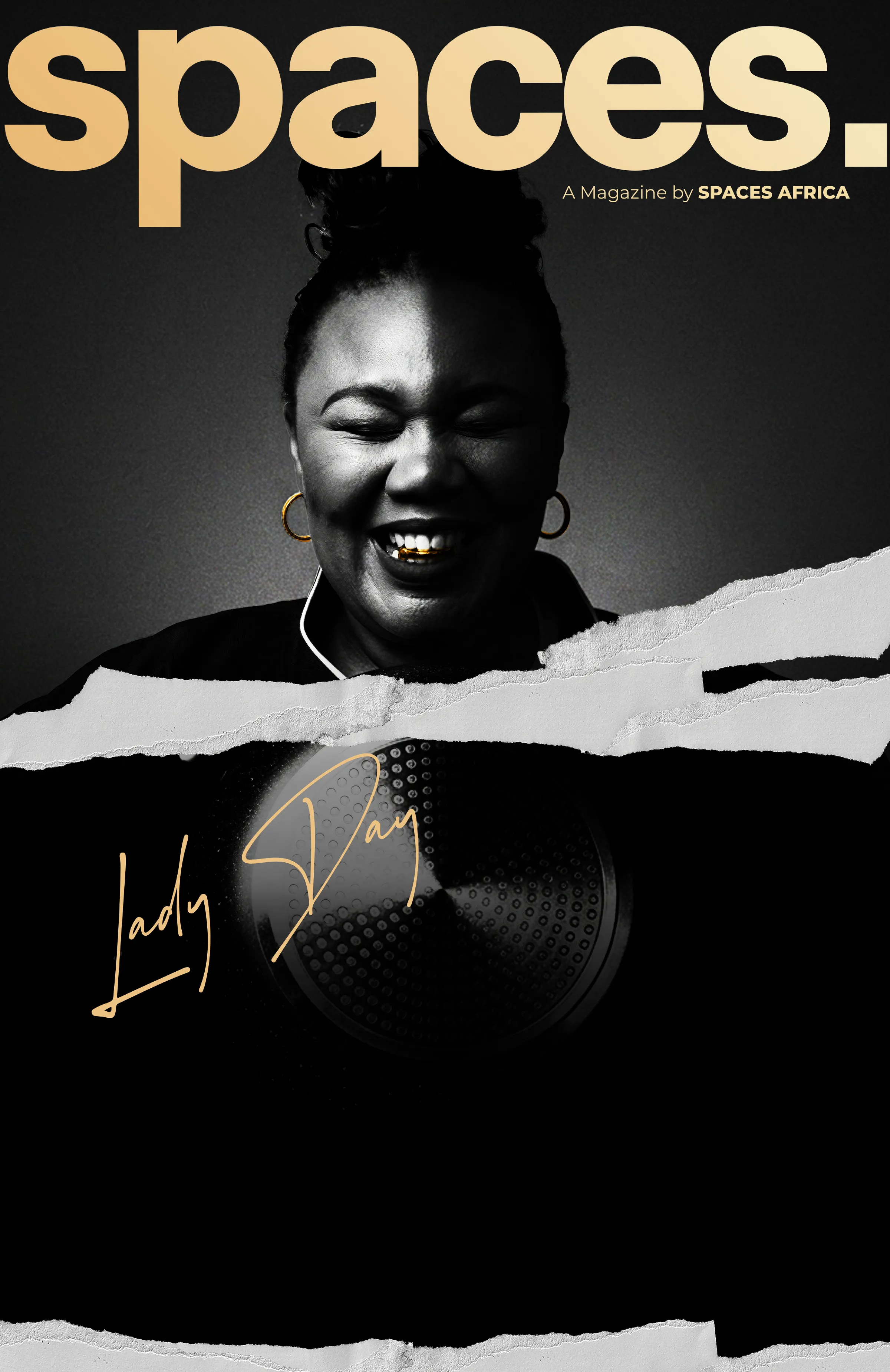
is
Words by: Man’s Not Yandhi Photography by: Black Milk Spacesmagazine: Culinary Edition
Truth is, there are some things we find before we realise we are even looking for them. For Langelihle “Lady Day” Mthembu, the world of food was one of those things. What began as a way of simply gathering friends around a table slowly became a freedom of understanding herself, finding community and, eventually, discovering the stories held within the food around all of us.
She never really thought of it as her direction. At least, not at first.
“I never saw this as a passion for some reason,” she says. “I just saw this as something that I was doing maybe to heal myself in some sort of way.”
Through Lady Day Food, Langelihle has created a platform & brand where food is not simply served, but experienced - through sensory dining, storytelling and a deep curiosity about where our flavours come from and what they continue to mean to us who are interested in context.
Yet arriving at this point has required more than simply following a passion. It has meant questioning what she thought she knew, unlearning inherited ideas, and coming out of her shell to claim space within a food culture that feels like it's being redefined.
“The constant unlearning is that I need to unlearn that I do have a place,” she says, laughing. “Versus me thinking that I don't have a place.”
In conversation, Lady Day speaks with the same sense of curiosity that continues to shape her work. For her first-ever magazine cover experience, she reflects on the moments that brought her to food, the memories and influences that continue to inform her work, and what it means to build something that is both rooted in where she comes from and open to where she is going.
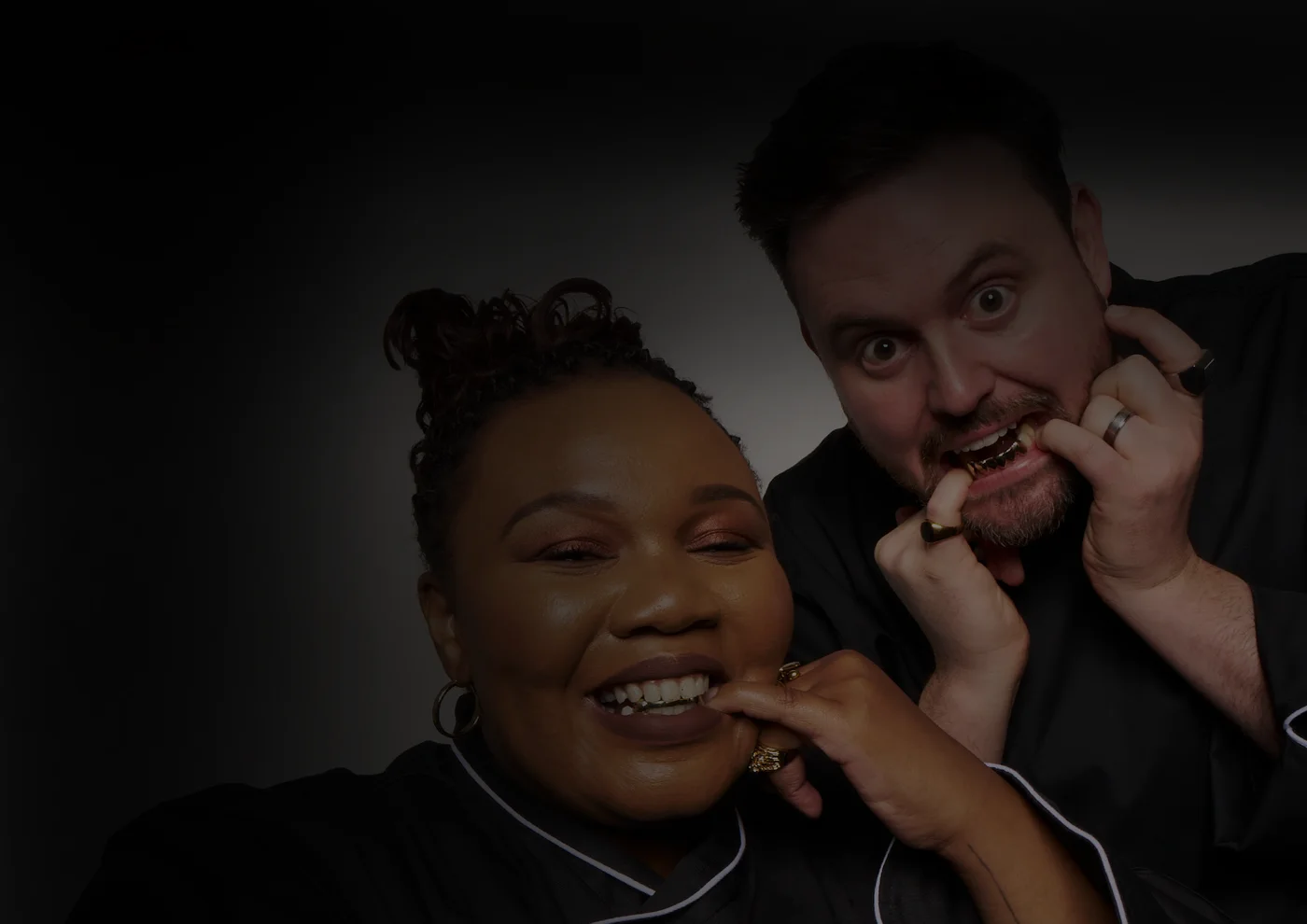
With Langelihle “Lady Day” Mthembu

With Langelihle “Lady Day” Mthembu
It was always at the back of my mind, but it wasn't a thing of like, oh, how can I start it? I guess the therapist had pushed the thoughts into revelation.
My therapist had only just suggested that I look deep in me to see what it is that makes me feel in community with people. And what's that thing that you're willing to share in order to create your own community? So that was the challenge.
Because when I was in Cape Town, I felt a bit displaced. And I felt like I didn't have my own community. I had people around me, but I just didn't feel like it was mine.
So I think when I was just challenged to do something, that was the first thing that I thought of. And maybe it was simply influenced by my friend's encouragement at the back of my mind. So it was always at the back of my mind, but it wasn't a thing of like, oh, how can I start it? I guess the therapist had pushed the thoughts into revelation.
A friend of mine, Manyaku Mashilo, who's an artist, and two friends of mine who owned a space called Breaking Bread in Cape Town, pretty much said to me, “Hey, I'm exhibiting a work”.
“We have a space. Manyaku is exhibiting work. There's a friend of ours, Nombuso (Mathibela), who's coming into Cape Town from Joburg. Why don't you guys do a thing where it's like you're making the food, she's showing her work, and Nombuso is going to play music?”
So it was this art exchange that we had within the space called Breaking Bread. That was the first time when I saw something begin flourishing, like me actually selling plates of food and them being sold out, people interacting with the music around it, and the artwork also at the same time. I think the goal at the end made me see that this could be a viable thing in regards to it being monetized, I guess, because in my mind, I didn't think of it money-wise.
Because as soon as I take that element out of my business, if I stop going to a certain community that eats a certain way or preserves their own culture through food in a certain way, if I stop that and I just become this person that is able to just create a business where I'm just ordering from a manufacturer, where I'm talking directly to my staff, where I'm just giving out a service, as soon as I take out that element, I know for sure that the passion would go away.
That's what it is.
Yeah, I mean, for me, it's the storytelling parts that I saw people do, but maybe they weren't doing it in the same way I thought it needed to be done. And also, I don't think there was a gap. I'm going to be honest. I think there was room for me to also enter the ecosystem of the culinary space. I feel like anyone who takes on the journey of entrepreneurship or the food journey is adding to the space.
All of us have our own markets. All of us have our own audience. I think it's just about the customer wanting a different experience, and that's how they engage with you. So for me, I think I've looked at it very differently. I was like, hey, let me just go for it, and let's see who the customer is that is interested in this different way of seeing food.
Because a pumpkin is a pumpkin, but maybe if I tell the story of a pumpkin breakfast in Zimbabwe, somebody looks at it much differently than the same pumpkin we all grew up with.
‘’Because a pumpkin is a pumpkin, but maybe if I tell the story of a pumpkin breakfast in Zimbabwe, somebody looks at it much differently than the same pumpkin we all grew up with.’’
Yeah, in terms of unlearning, I guess for me, the constant unlearning is that I need to unlearn that I do have a place [laughs], versus me thinking that I don't have a place. So that's the unlearning I constantly have to do because I don't know if I'm lucky or if I'm grateful that I've had people within the culinary space who have encouraged my work and said I should continue, versus how I have to be very honest with myself in terms of, like, I haven't engaged in the culinary world the way everyone has, you know…
People network with other people; people seek advice from other people that are in the space. I've had to learn this on my own as much as possible. There are so many aspects of creating this business that have felt very isolating for me.
Whenever I have to unlearn stuff, it's usually the entry point. It's like there is a community out there that you could reach out to. So the unlearning is my openness to saying that I am part of this world versus thinking that I am so different that I have isolated myself.
I have my own ideas of what chefs are. Like, for me, chefs are people who are culinary trained, who have a long line of working in kitchens, and who understand the system of having to build within a kitchen system. Like, you know, you become a sous, you become a whatnot, you become all of that stuff.
That's why I also stray away from the word “chef,” simply because I know I did not train in that light, and I don't think of food in that light. But I do seek out chefs to help me with the efficiency of my business, regarding them having the skills to take the ideas that I have and just be able to produce them in a much more efficient way, you know, versus the way I look at things, where I'm looking at where the ingredient comes from. It's all pretty for me.
They are able to produce all of the pretty stuff, and then you need that cameraman, you need the assistant, you need the whatnot. So I essentially am that. I am the Creative Director of Lady Day Food, and the people that help me out are the chefs and the chef community that are able to execute all of the things that I need.
Okay. I don't feel like the food researcher in me has changed anything. I think the food researcher in me has informed the way in which I create the food experiences.
So once I find a story, I'm able to break it down into specific dishes that I'd like to explore. And then I tell myself in terms of what I would like the guest to experience.
So would I like them to come and immerse themselves in maybe three different dishes that tell the story of what I've researched? And then it's like, do I want to take them to that specific continent? And sometimes that would be through the elements that are on the table or musically.
Music has been one of the ways that I've used as a really good instrument for immersing someone into somewhere. So that would be finding the right person, the right music curator, who I know has that taste or has explored that specific continent in terms of music. So that when the guest comes in, for example, if they're eating Cuban food, they're listening to music from Cuba or anything like that, Spanish-wise, that influences the region in itself.
And then what's this, the food that I'm serving, are the notes going through? Are they tasting the peppers that influence things? Are they eating maize from that region or the neighbouring regions that influence that specific place?
So that is how I approach my food research and the food experiences. It just needs to be this seamless journey of a sensory experience that allows the guest to leave knowing that they've learned more about what they're eating instead of just that they ate a good steak.
I think this is an ongoing question for me; the way I started was because I saw something different in food. I still go back to my friends encouraging me to get into food, but I think my biggest argument was that I just didn't want to sell a burger just for selling a burger.
And once I found that there were stories behind food, that was the driving force that made me continue doing food, is that I'm able to find a story in something. I'm able to look at a recipe and find out that this was started because the Chinese had moved to India and had to make sure that the spices in their food influenced the way in which the Indian culture could still engage. So it's those kinds of things that I have to think about.
And I think about, like, oh, a dish is not only a dish because of this; it's the dish because it has a big story behind it. It's like the reason why we don't eat sorghum anymore is that maize was introduced into our lives in the early 60s. And that's why maize started being a thing versus us eating sorghum every day.
So it's those kinds of things that I think about that continue the journey for me. So every time I look at something, pasta is not just pasta. Pasta is something more than what it's supposed to be.
Yeah, I mean, there's been a lot of things that have probably influenced not wanting to continue or anything like that. But I don't know, I guess I always go back to the fact that I have built this, and I've built it in the past six years. I don't know, there's this encouragement of, like, you did start it. So why do you think you can't continue? You know?
So I've done this before; why can't I do it again? So it's always that. I think that's the thing that always encourages me is that the belief in me being able to have done this once upon a time means that I can do it again, you know.
And I won't lie, the other aspect is when I do want to give up, there's signs from people, like old clients or people that have encouraged me, keep on coming back to me and saying, hey, do you want to do this? Is there an opportunity for this?
So I don't know, like until the day I finally say, no, I've actually chosen to go into an office job [laughs]. It's the day when clearly it won't be a thing anymore, you know. When I think I have my down seasons and I'm like, I haven't had work in two months, then all of a sudden the next three months are busy, you know.
You can continue and figure it out. And also, I'm very honest with myself in regards to I'm only a six year old. My business is only six years old. There's people that are 10 years old and they are only figuring it now, you know. So I have to be much more gentler with myself, like, you know. Yeah.
So there's those moments of the way I have, like, just I'm more kinder to myself around things than I think the average person is kind of to themselves.
I'm more kinder to myself around things than I think the average person is kind of to themselves.
Yeah, I think all these worlds influence me in regards to, they all start from a very blank canvas, like all of them. Like if you think of music, music is starting from a blank canvas also, like the music sheet has its like, I guess guidelines, but you kind of have to create the notes within the actual music.
Any painting is started from a blank canvas that you buy from an art shop. Yeah, so every single influence for me is basically an improvisation of creating, like all of us are creating from a blank place and figuring it out as we go. And that for me has influenced my own way because I am also kind of starting from a place of just like, I'm not sure what the direction is, but I know that what I'm building is something that will be enjoyed by people in the end.
It will have a much more different impact on my personal life. And also I'm able to reap more knowledge from the history created before I was born and the knowledge that I'm bringing it into the contemporary in a way where it is understood now, you know?
So for me, it's literally like, we build these worlds for ourselves to share with other people, but at the same time, they are really influenced by our everyday lives, our everyday conversations, things that we are learning, whether it's new or old, conversations that we have with our elders, conversations that we have with our friends.
I think my, my idea of success has always been the same. Yeah. Cause I think if my idea of success was money, cash [laughs], like, I think I wouldn't do this at all.
I wouldn't be in this aspect at all. My idea of success has always been the enrichment of my family. Uh, I really have this aspect of like, I really want to be very enriched within my family.
Uh, like if my family is good, I'm good. Um, let me think what else, uh, I've always wanted a quiet life in a farm somewhere. So I still aspire to get that life where I live in a rural area and my house is like two, maybe two yards away from the next house, that kind of thing.
I've had somebody say to me, uh, would you ever want to be a teacher? And I don't know if I'll ever get to that point, but I know that there's probably an aspect of me that does want to nurture and teach people. Um, so my idea of say, uh, of successes has always been a very quiet and content life in, in a rural place somewhere. So I've always kept that essence and I like the knowledge of knowing that I'm within community and I have space within my community, like as a person, you know?
So yeah, yeah. I think my idea has always been that. I know the day when I'm rich is when I own a plot of land. That's when I, that's when I'll be rich, rich, rich… I wouldn't care about anything else. I'd be like, yes, I have a plot of land. I have a nice house on that plot of land. And that's my idea of rich. And it's always been that. So yeah, it's never really changed.
I don't know. Cause I'm constantly like, I know I'm much more patient with myself than I was before.
What else can I think of? I'm more curious, and I'm able to ask questions. I've learned that I'm still very shy.
I don't know. Cause I, I really think that I've worked on understanding when I need to be present amongst people. And when I'd like to go back into isolation and just be with myself.
So this has been an aspect of mine that has evolved with even building the business. Like, I totally understand that I work in a business where I have to interact with people most of the time, because when you present your personality, you also... I try my best to kind of separate them, but the truth is that I am Lady Day Food as much as I'm Langelihle.
Langelihle is very curious, and Lady Day Food became part of my curiosity. Langelihle loves music. So that's why she named the business Lady Day, because it was from an old jazz singer. Billie Holiday, whose nickname was Lady Day.
So it's those aspects where it's like they intertwine themselves always. But the evolution of me is that I've had to learn that I've had to let go of a lot of my fears and become this person that people know as not shy, you know [laughs], whereas I still feel like I'm very shy and I'm still that child that my grandmother raised.
But I'm this big city girl now that has to face things like having a cover (magazine). So those are the aspects that I have to, you know… and give myself a chance to be out there cause I really did hide behind my work for the longest time, simply because I knew my work was good and I knew that I could prove that then, but now people want to know the person behind Lady Day, and yeah, it's that- it's like having to grow out of your shell.
Okay. So yeah, I don't necessarily feel any pressure about the importance of it, but I know for myself, there's been a curiosity for me to know it.
I don't know. I feel, I think I had said this before, where I was like, I feel like we might lose this. We might lose the tangibility of knowing our food as a continent. And there are main players that are doing the work…
And I just feel like I am part of those people that want to do the work, that feel the need to do the work so that we know these things so that they don't get lost.
I've never thought that far about what we should be saying, because I don't know anyone who does not praise South African food.
Yeah. Like people really praise South African food so much. Like even South Africans that live in different countries will always say South African food is really good. And this is from a produce perspective. This is from the dishes that we have. This is from, you know, like people creating South African restaurants in different countries.
So, I cannot say that there's nothing positive that has not been said about South African food. I don't feel like we are not on the map in terms of South African food. So I think we have ample praise regarding our food.
I just wish South African food was taught in culinary schools the way French food is being taught, or not just South African food but African food in general was taught the same way as French and Italian food is taught in culinary schools.
I know for me, one thing I physically want is permanency. If I could get that, that, that restaurant, I'd be, I'd be happy.
[Laughs] I also want that restaurant to be a rotating place for people in terms of them learning and moving to their own dreams and goals.
I don't know how to describe it, but I know that I want the guests to feel like they can sit here, feel the memories of, or learn something new and be able to go out and recreate their own things. But also, I want the people working in the space to feel the same way, like to be able to learn something at Lady Day Food that they probably did not learn at culinary school and be able to take that and make their own dreams come true somewhere else. That's the ideal space I would like in my life.
I hope my curiosity never changes. I hope the way in which I engage with food never changes. I hope I build a community that makes sense and understands what it is that I do. I think I'm constantly having to explain what it is that I do. And I think I've naturally understood that this is going to be a continuous journey where I am constantly talking about what it is that I do.
So that aspect, I hope, does not also change that. I continue to- I don't know if education is the right word, but I hope that I'm able to learn as much and share as much as I'm learning.
And I hope I still can create all of these experiences, but I share the people that are teaching me. So I think, yes, the teaching aspects that I've learned from just conversations can be amplified for people.
Yeah. I think that's what I would like it to grow into in the next few years, where I'm able to create such systems that are not only kept for me, you know, the person that did go out to that particular place. I'm hoping that can be open to everyone else.
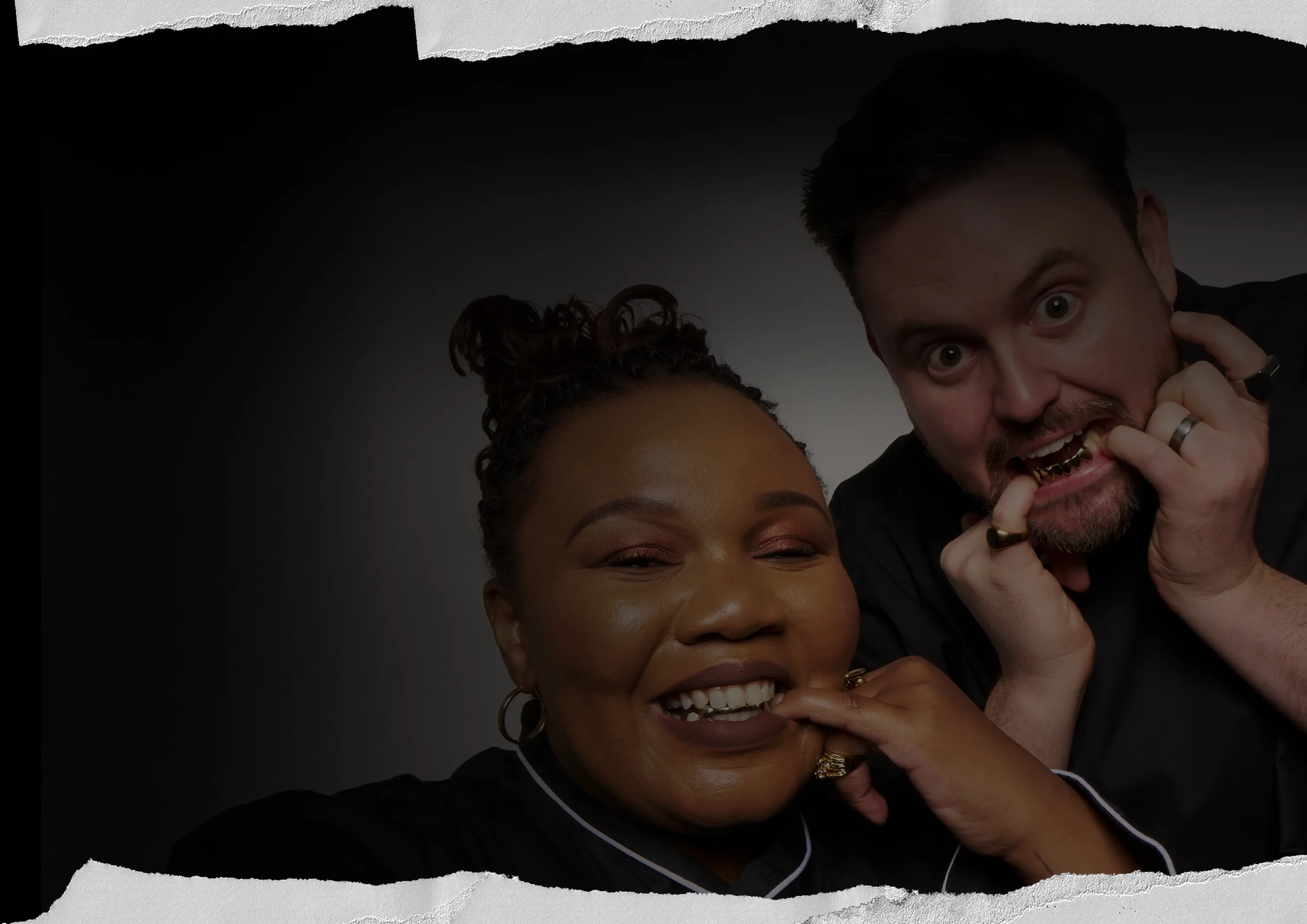
I've never thought of these things. I hope mine says, every food has a memory and mine says, I don't know. Cause all I'm thinking about is, like, presence.
I don't know. I'm trying to think, like, mine was present, or mine was, uh, cause I'm also trying to find, oh, and mine was a continuous discovery. That's what it was like. Yeah.
Yeah. Cause I'm trying to figure out what I feel my life has been. I really think I'm continuously discovering things, and I would like my life to be remembered that way.
Yes. Continuously. Yeah.
A 3-part video series
with Nick Hamman & Lady Day
In the Kitchen with Nick Hamman & Lady Day is a three-part culinary conversation series where food becomes a lens through which to explore culture, identity, travel, creativity and personal growth. Across three carefully curated courses, Nick and Lady Day uncover the stories, memories and influences that shape who we are, transforming the kitchen into a space for meaningful dialogue and authentic connection.
The journey opens with a starter inspired by Lady Day's exploration of Chinese cuisine, sparking a conversation about cultural exchange, migration and the global influences that continue to shape the way we eat. For the main course, she serves a richly caramelized short rib with spring onion, fresh salad and obriato sauce, providing the backdrop for discussions on mastery, creativity and building a life and career with intention. The experience concludes with a South African-inspired Amasi Dark Chocolate Mousse, celebrating heritage, innovation and the evolving future of African food culture.
Throughout the series, each course is elevated by thoughtfully selected Rupert & Rothschild wines. The Rupert & Rothschild Baroness Nadine Chardonnay, renowned for its elegance and Burgundy-inspired character, accompanies the starter, complementing the delicate balance of flavours while reflecting the spirit of exploration and cultural exchange. For the main course, the Rupert & Rothschild Classique, an iconic Bordeaux-style blend celebrated for its balance and layered complexity, enhances the depth of flavour and richness of the conversation. For dessert, Champagne Barons de Rothschild takes centre stage. Its crisp character, delicate notes of pear, almond and white flowers, and refined finish beautifully complement the Amasi Dark Chocolate Mousse, creating a pairing that is both unexpected and sophisticated.
At its heart, In the Kitchen with Nick Hamman & Lady Day is a celebration of food, wine and storytelling, revealing how shared meals can connect people, preserve culture and inspire new perspectives.
Cultural exchange, migration and the global influences on how we eat.